
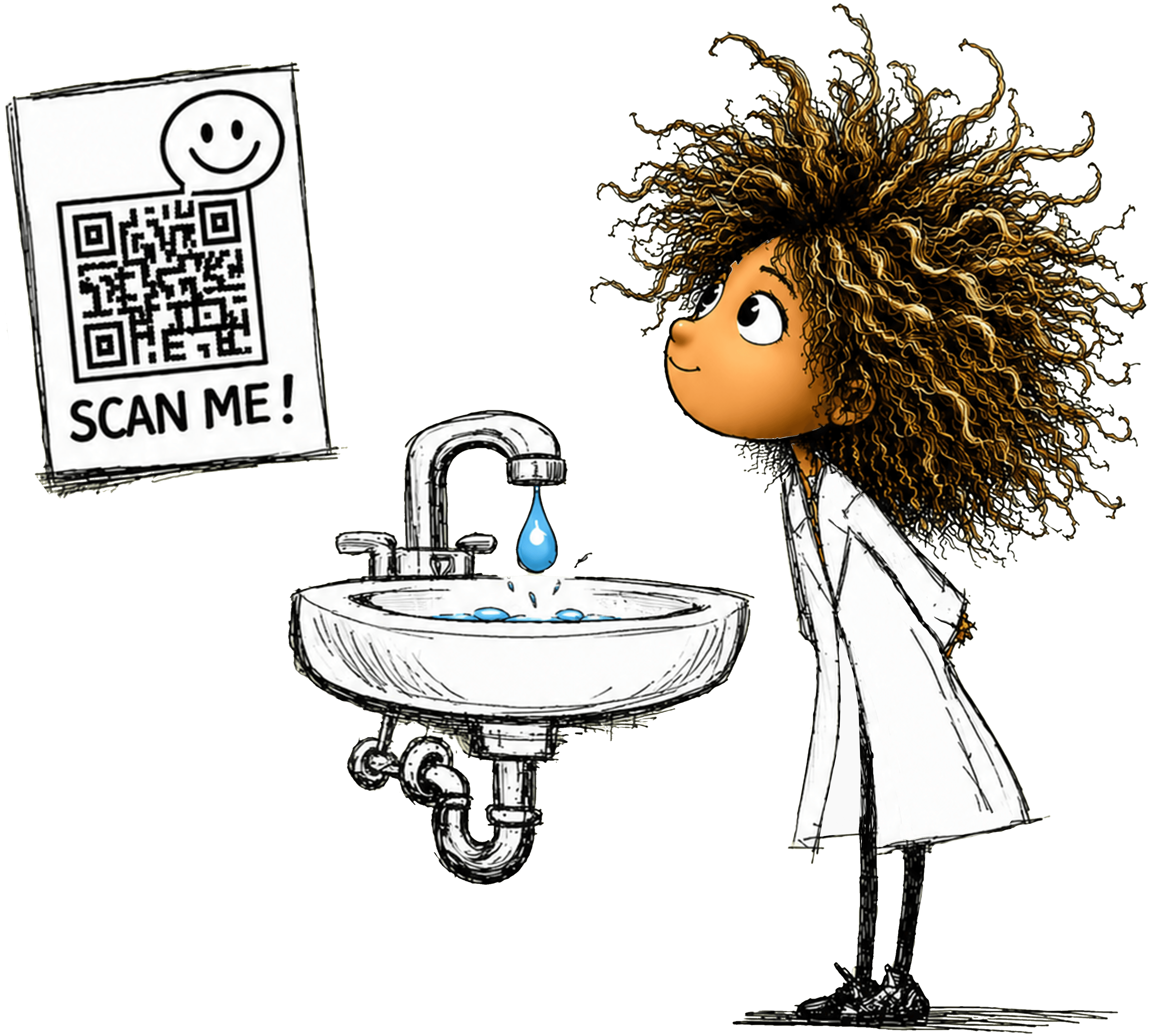
Someone notices a problem
A tenant sees water near a unit door. A restaurant guest notices a restroom issue. An employee hears a gate squeak. A customer sees a light out in a hallway.
Service Recovery Idea
A brilliantly simple idea for any business: put friendly QR posters near the places where problems happen so customers and staff can report small issues the moment they notice them—before they become expensive repairs or frustrating experiences.
The story
At a self-storage facility, a small leak can sit unnoticed until it damages someone's belongings. A sticky gate can frustrate tenants for weeks before the owner hears about it. A broken light, loose latch, or rough patch of pavement might be obvious to customers and staff but invisible to the right person on a busy day.
The owner solved it with a simple message: "If it leaks, squeaks, or creaks." Posters and stickers went up around the property with QR codes that opened a short maintenance report. Customers and employees could scan, take a photo, add a note, and move on.
The experience felt helpful instead of formal. Customers knew the business wanted to hear about problems. Staff had an easy way to flag what they noticed. The owner started finding issues earlier, before they became bigger repairs or customer complaints.
The same pattern works well beyond self storage. Restaurants, hotels, clinics, schools, gyms, retail shops, and service businesses all have small issues people notice but may not report. If the path is unclear or inconvenient, the report often dies right there and the problem keeps getting worse.
How it works
A tenant sees water near a unit door. A restaurant guest notices a restroom issue. An employee hears a gate squeak. A customer sees a light out in a hallway.
The poster doesn't ask them to track down the right person, make a call, or remember it later. It simply gives them an easy way to say, “If it leaks, squeaks, or creaks—let us know.”
The form stays quick and simple: tell us what you noticed, where it is, and, if possible, show us a photo.
The issue is captured while it is still small, clear, and tied to the place where it happened.
What it catches
A maintenance report does not need to capture every detail, assign responsibility, or walk someone through a formal support process. Its job is simpler: alert your team that something needs attention, show where it is, and provide enough information to take the next step. The easier the report, the more likely staff are to understand and use it.
Water around a self-storage unit door
A gate that squeaks or sticks
A loose handle, broken latch, or damaged fixture
A hallway, parking lot, or restroom light that is out
A pothole, trip hazard, spill, or damaged sign
An entry-area, waiting-room, dining-room, or office issue
Where it fits
The words can change for the setting. The mechanism stays the same: make it obvious, friendly, and low-effort for someone to acknowledge what they noticed.
Home service example
An HVAC company could place a small service sticker or tag near equipment, drain lines, pumps, filters, or other parts where problems may start. If the customer later notices a drip, noise, vibration, smell, or performance issue, the QR code gives them a direct way to alert the company without searching for paperwork, remembering who installed it, or deciding whether the issue is worth a call.
That makes the original service provider the path of least resistance. The sticker is useful in the moment, but it also keeps the business positioned for future maintenance and repair work.
Self storage
Restaurants and cafes
HVAC and home services
Hotels and short-term rentals
Retail stores
Gyms and studios
Schools and childcare centers
Local service businesses
Why it matters
A customer who can report a problem quickly does not have to wonder whether anyone cares. They see the business asking for the information, making the process easy, and treating small issues as worth fixing.
For the owner, the benefit is just as practical. Maintenance becomes easier to spot, easier to prioritize, and less dependent on chance. The business can fix more problems while they are still small.
That is service recovery before the service failure fully forms: not a dramatic save after a bad experience, but a simple system that helps the business notice and respond earlier.
We can help you turn QR codes, forms, and follow-up paths into a lightweight early warning system for customers and staff.